When Did We Start Worshipping Time?
The People on the Grass
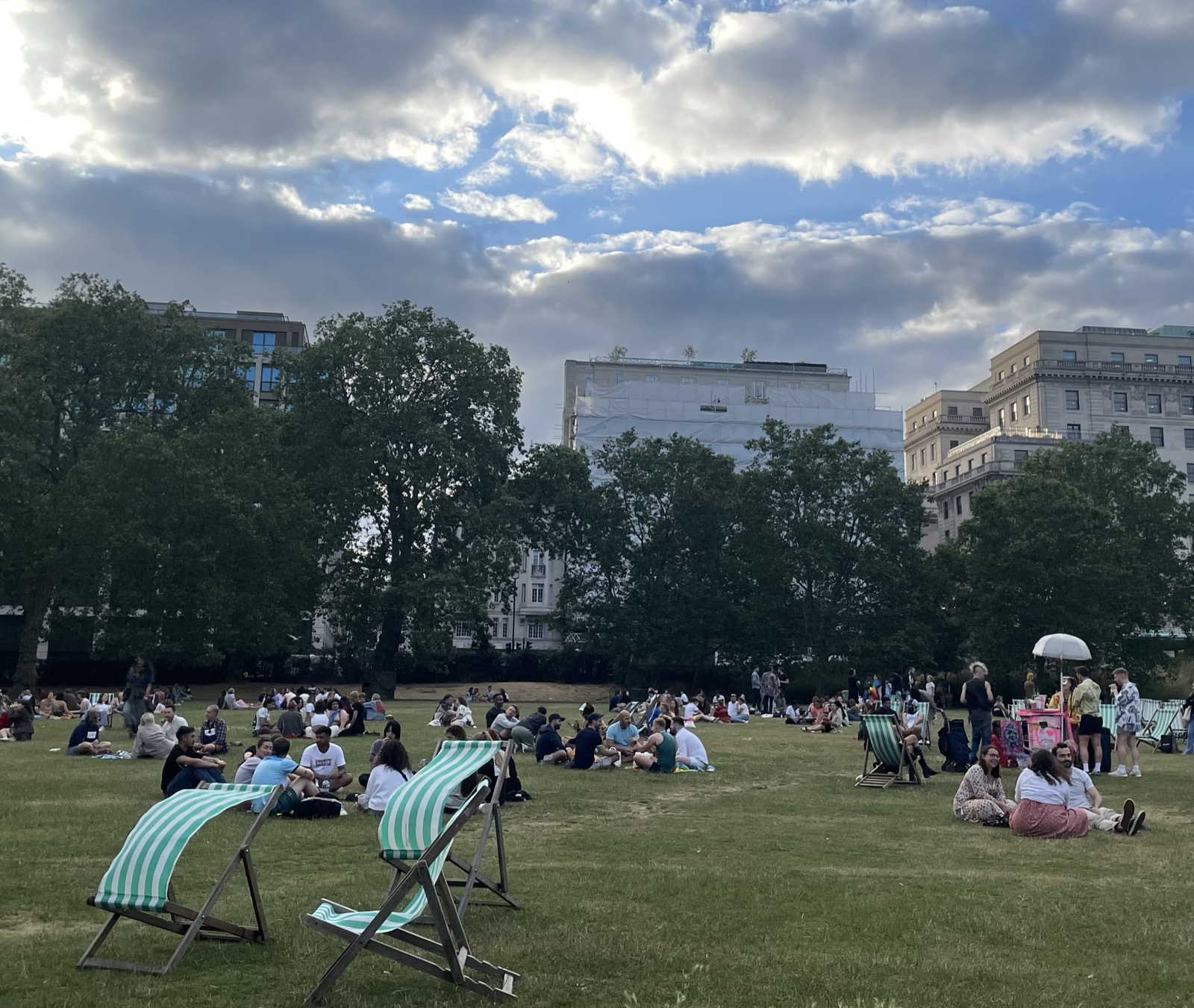
In my first year in the UK, I often saw people lying on the grass near my school.
I grew up in East Asia, so I found the sight a little unfamiliar. What puzzled me more was that sometimes I would walk past the grass on my way to school in the morning, only to see some of the same faces still there when I came back in the afternoon. They just lay there, not reading or looking at their phones, apparently doing nothing at all.
Back then, I found it hard to imagine that someone could spend most of a day lying on the grass doing nothing.
Looking back, I think what made me uncomfortable was not the sight of people lying on the grass itself, but the fact that I did not know what to make of that stretch of time.
If there was no studying, no work, nothing to finish, what exactly were those hours for?
Growing up, I was taught to associate time with something to be done. Lessons, exams, tasks: every stage had its own goal. That logic did not disappear when I grew up. It simply took on different forms. Work should be efficient, studying should lead to progress, and exercise should follow a training plan. We keep looking for better ways to get more done with the limited time we have.
I seem to have absorbed this way of thinking too. In fact, I quite enjoy it. My instinct is to ask how I can build a system or optimise my time to get twice as much done with half the effort. And I genuinely enjoy the convenience and results that this way of thinking brings.
When We Start Measuring Relationships in Time
I've noticed that talking about dating has become an easy way to connect with people.
Even with people I've only just met, conversations can quickly become more familiar once dating comes up. We swap stories, talk about the people we've met, and discover how many of our experiences sound alike.
People seem to care more and more about time.
Time does more than measure how long we've known someone. It also pushes us towards a decision. Dating is starting to feel like a process that has to keep moving: meet someone, go on a date, assess whether you're compatible, decide whether to continue, and eventually define the relationship. Every step seems to call for a clear outcome.
Time seems to have become a driving force here.
We have become so used to assessing and making decisions that we apply the same logic to emotional connections. But these take time to develop.
In the logic of efficiency, the sooner we get feedback, the better. Put in time, gather information, assess the results, then decide whether to continue. This can help us avoid unnecessary costs and make decisions more straightforward.
But close relationships have something particular about them: in getting to know someone else, it is precisely by going into the deep, dark places that we come to understand ourselves better.
On a first date, we see only part of a person, and only in a particular setting. We can form an initial impression, but even after a few dates, it is difficult to truly understand someone.
A deeper understanding often comes from moments we cannot plan: an unexpected conversation, a disagreement, a meeting when both people are tired, or a seemingly insignificant moment when something about the other person suddenly becomes clear. We need to go through things together to discover how we really feel about someone, and what happens when the two of us are together.
So I asked myself another question: How long does it take for a relationship to move from a set of first impressions to a genuine understanding of another person?
I don't know if there is a right answer. But if we treat time as an investment that needs to pay off quickly, it becomes easy to undervalue the time we spend together before it leads to any clear conclusion.
We seem to have grown used to using time to judge whether something is worth continuing. Time is limited, so we must be efficient. Time is precious, so we must not waste it. Gradually, these ideas no longer seem to need explaining. They become something like beliefs we take for granted, shaping how we organise our lives and make our choices.
Is Time an Objective Measure, or a Subjective Experience?
The trail runner Kilian Jornet once described an experience while climbing an icefall in the Khumbu region, at an altitude of around 6,000 metres. An avalanche knocked him over and sent him falling into a crevasse. During the fall, which lasted less than ten seconds, everything around him seemed to slow down. He could watch blocks of snow sliding slowly, notice details around him, and almost see himself falling, bit by bit, deeper into the crevasse.
Objectively, the fall may have lasted only a few seconds. But to him, time seemed to stretch to ten minutes or more. The density of those few seconds held far more than most ordinary moments.
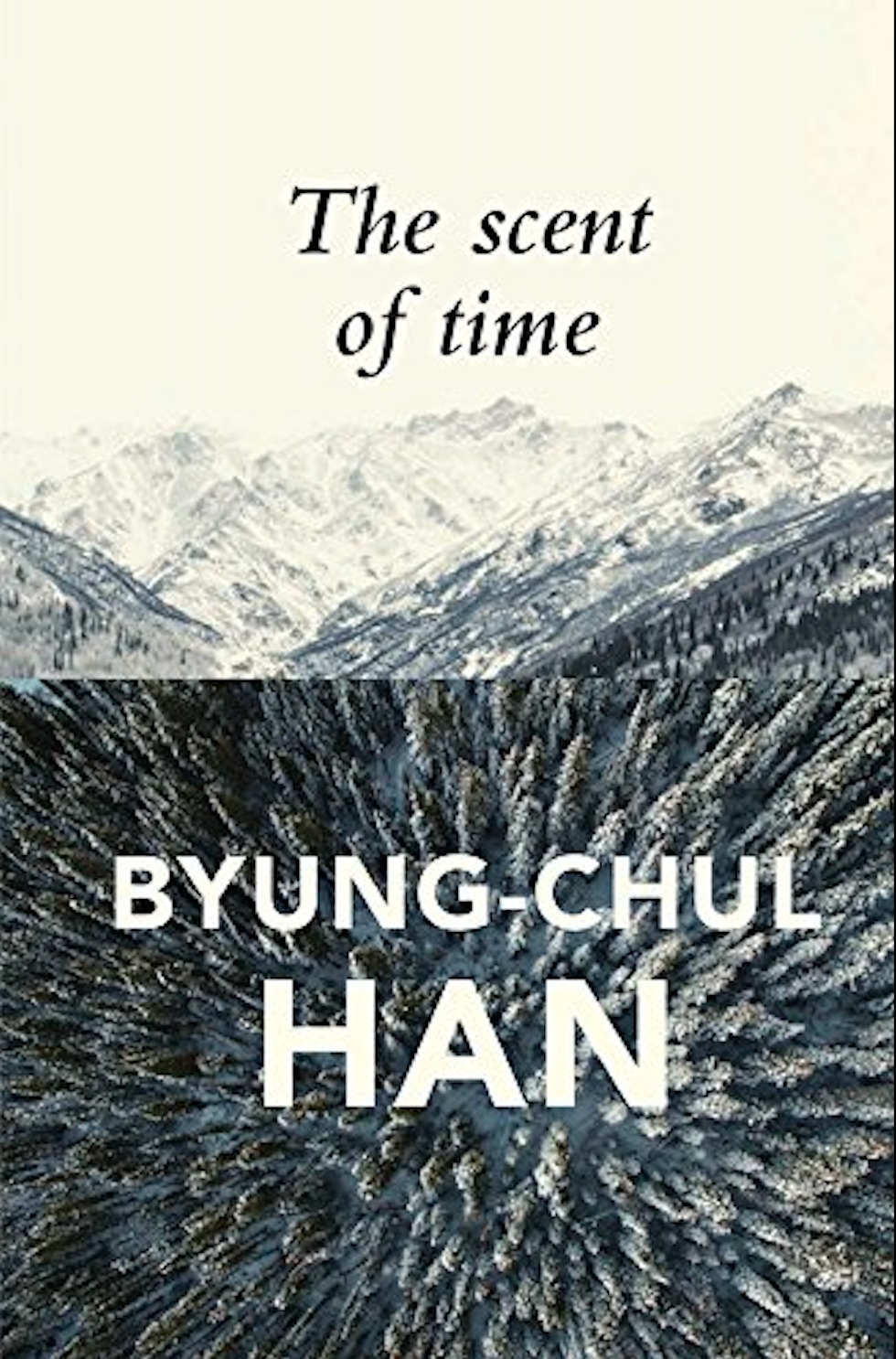
In The Scent of Time, Byung-Chul Han draws on Marcel Proust's In Search of Lost Time to explore our experience of time. When the madeleine is dipped into lime-blossom tea and its familiar scent rises, an entire childhood comes flooding back.
Scent is a phenomenon of persistence: slow, roundabout, impossible to speed up and impossible to repeat. Festivals, falling in love, a summer afternoon on the school playing field, an unexpected corner on a trip… why do some experiences stay with us for so long?
They are the traces of moments when time truly lingered.
Sometimes, when I'm on a crowded Tube, I play a game with myself. I imagine my life as a film and play it backwards from the present, watching for the scenes that keep flashing up. I've noticed that the moments that stay with me longest are rarely the highlights. They aren't getting into a dream university, setting a running PB, or reaching some milestone at work. They are the most ordinary moments imaginable.
One scene I replay again and again is from when I was six or seven. I loved the electronic keyboard at a classmate's house, and one day my dad suddenly said to me, "Let me take you to buy a keyboard."
It was raining heavily that day, and my dad took me out on his motorbike. On the way, worried that I might be cold, he asked me to come closer and put my hands into his coat pocket.
That little girl could never have imagined, on that rainy ride with her dad to buy a keyboard, that before long she would start learning the piano, and later choose music. Piano and music would stay with her through primary school, university and work, right up to the present. That rainy day was just an ordinary day in childhood, yet without anyone noticing, it connected the many years that followed.
Another scene is from a summer afternoon when I was little. I woke up from a nap and saw my mum sitting there reading. She looked up and said, "Oh, you're awake? There's your favourite guava on the table."
The third is an autumn afternoon when I was reading in a park with the person I was seeing at the time. I lay with my head on his lap and read there for the whole afternoon, until the light faded and the air grew cooler. He put his coat over me and asked whether I wanted to head back or read a little longer.
None of these scenes has any particular drama, yet they keep replaying in my mind.
But why these?
If time is what happens in a single moment, why do some moments, long gone, stay in our memories for years and keep returning to us?
Today, the achievement society puts efficiency and optimisation first. Eight hours at work, two hours scrolling on our phones: our days are packed. So why is it so hard to come away with a clear experience?
Han's writing on modern time gave me a way to understand this. Time is cut into isolated presents, with no connection between them and no narrative. It passes through us without leaving anything behind.
Time itself has not sped up. What has changed is how alike the events inside it have become. When one moment is no different from the next, and nothing connects them into meaningful stretches, time loses its continuity and collapses into blankness. We think we are making life as efficient as possible, but in fact we are moving towards emptiness at a faster pace.
Is Time Linear, or Can It Fold?
In the year before I moved to England, I was saying goodbye to my students and friends. Some of my students cried. Some of my friends cried too. G cried the hardest and the longest.
I asked him why he was so sad. He told me he had gone to high school and university in England, and had worked here too. He knew what it felt like to live in a place where there were times when you felt respected, and other times when you didn't feel truly respected. Even when your language eventually becomes very good, even when you can talk to people for hours, there are still moments when you feel alone.
At the time, I didn't really understand what he meant. London held such a strong appeal for me that I was almost overwhelmed by excitement. I thought I would work hard at my English and meet lots of people. I couldn't quite understand why he thought I would feel lonely, or why I might experience those moments of being respected and yet, somehow, not truly respected.
Then came my second year in England.
One day, during a seminar discussion about education, I brought up the impact of China's one-child policy on education. As I tried to explain it to my classmates and professor, I realised how unfamiliar the topic was to them. Even with a classmate from Hong Kong helping me explain, I still had to spend a long time providing background, and they still didn't fully understand. In the end, all I got was a brief response: "Interesting."
There I was, surrounded by people and taking part in a discussion, and yet I suddenly felt lonely.
Only after living in England did I begin to understand the distance created by culture and context that G had tried to describe to me. Sometimes, you talk about something utterly familiar to you, only to find that people somewhere else can barely relate to it. When you try to explain, the response can fall somewhere between respect and a kind of indifference.
This doesn't necessarily mean that anyone intends to offend you. It's just that the things that make up your own cultural experience can become almost impossible to put into words or make understood in another country, even when all you're doing is saying a single word.
And sometimes, when people tell me about their own culture, about things that are entirely familiar to them, I find myself on the other side of that same distance.
At the time, I didn't understand what he was trying to tell me. Two years later, I experienced it for myself, and finally understood his words.
In that moment, it was as if we had met across time.
The Hours That Need No Counting
There are plenty of numbers in my own life too. When I run, I check my pace, heart rate and training volume. At work, I plan my schedule and set goals. I have no intention of giving these things up.
But I am now starting to be aware that, as I use more and more metrics to understand life, I also need to be careful not to treat the metrics as life itself.
I understand that time is limited and we have to make choices. But does every stretch of time need to prove its worth? Where should the experiences go that have no answers yet, produce nothing, and cannot even be clearly described?
Like those scenes that keep playing in my mind, I could hardly have known at the time what a stretch of seemingly aimless time would leave behind. When they happened, they were all so ordinary and aimless.
The meaning of some moments may not reveal itself at the time. We have to travel a long way, to another moment, before we finally understand what they left behind.
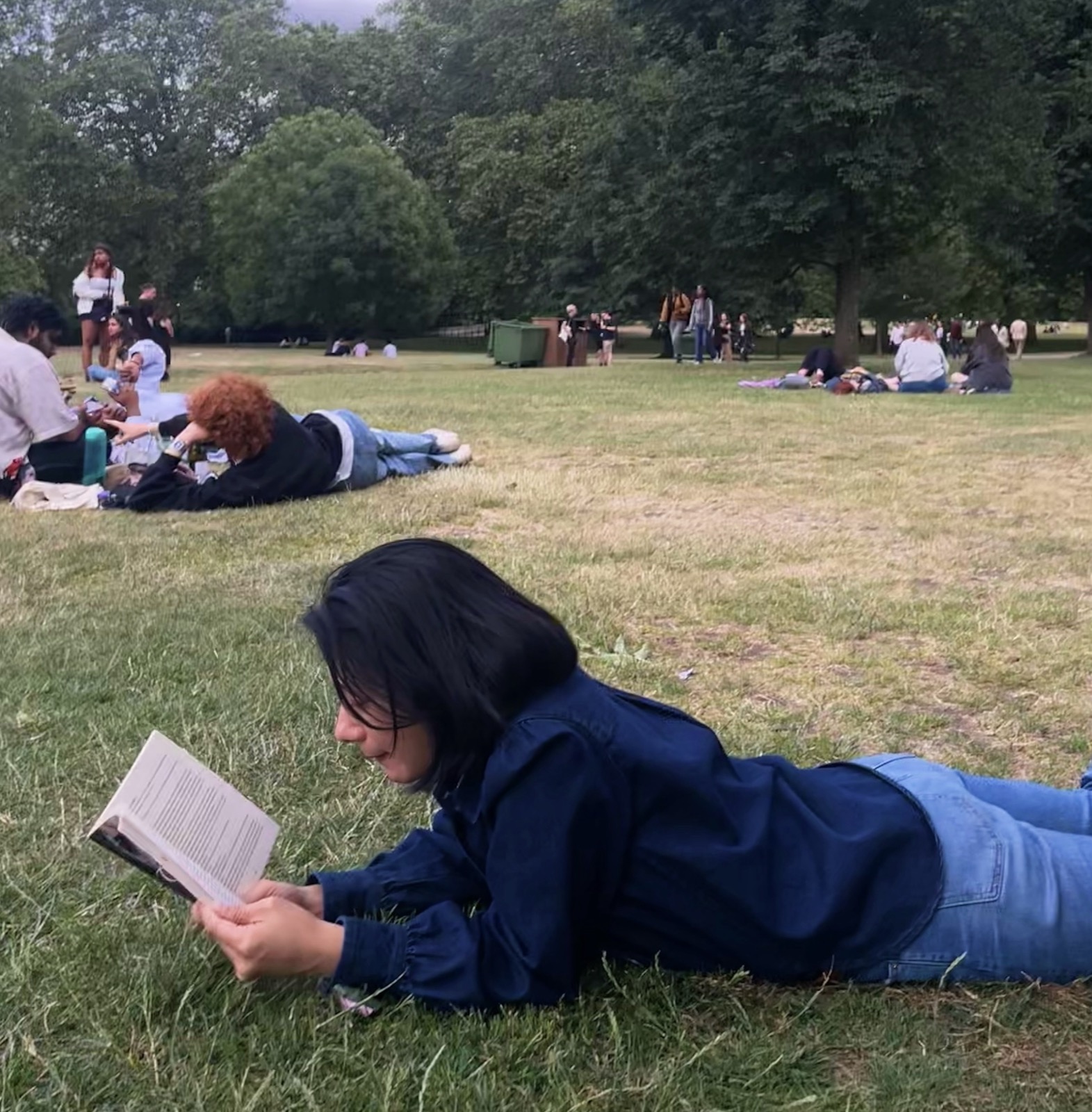
Now I have started to like lying on the grass too. I still cannot lie there doing nothing for a whole day.
But back then I asked: what exactly were those hours?
Maybe they do not need to count as anything.
草地上的人
刚来英国的第一年,我经常在学校附近看到有人躺在草地上。
作为一个从小在东亚长大的人,我对这种场景有点不习惯。让我更困惑的是,有时候上午去学校路过草地,下午回家的时候再经过,竟然还能看到一些相似的面孔。他们就那样躺着,没有看书,也没有刷手机,似乎真的什么都没做。
那时候,我很难说服自己,这个世界上竟然有人可以在草地上躺大半天,什么都不做。
现在回想起来,我觉得当时真正让我不习惯的,可能并不是躺在草地上这件事,而是我不知道应该如何理解那段时间。
如果没有学习,没有工作,没有完成任何事情,那么这几个小时究竟算什么?
我从小接受的教育里,时间总是和某种事情联系在一起。上课、考试、完成任务,每个阶段都有自己的目标。长大以后,这套逻辑也没有消失,只是换了不同的形式:工作要有效率,学习要有进步,运动要有训练计划。我们不断寻找更好的方法,希望用有限的时间完成更多事情。
我自己似乎也很习惯,甚至很喜欢这样思考。我总是本能地想,怎样通过建立系统、优化时间来做到事半功倍。而且,我确实很享受这套思维方式带来的便利和结果。
当我们开始也用时间计算亲密关系
我发现,聊 dating life 总是一个越来越容易拉近人与人距离的话题。
即使是刚认识的朋友,只要聊起 dating,彼此就很容易熟悉起来。大家交换约会经历,讨论遇到的人,也听到越来越多相似的故事。
大家似乎越来越看重时间。
时间不只是衡量我们认识了多久,也在催促我们尽快做出决定。Dating 越来越像一个需要不断推进的流程:认识一个人、见面、评估彼此是否合适、决定是否继续,最后确定关系。每一步似乎都需要一个明确的结果。
时间在这里似乎变成了一个推手。
我们是否已经习惯了进行评估和做决策,以至于将同样的逻辑应用到情感关系上。而实际上,情感关系的建立需要时间。
在效率逻辑里,一件事最好能尽快得到反馈。投入时间,收集信息,评估结果,再决定是否继续。这种方式可以帮助我们减少不必要的成本,也让很多决定变得更清晰。
但亲密关系有一个特殊之处:我们在认识一个人的过程中,恰恰是要走到深处暗处,才能更加了解自己。
第一次约会时,我们看到的只是一个人在特定环境下呈现出来的一部分。我们可以根据这些信息形成初步判断,却很难在几次见面之后就真正理解一个人。
更深的认识,往往来自一些无法提前设计的时刻:一次意外的谈话,一次意见不合,一次彼此都很疲惫的见面,或者某个看似不起眼、却让你突然理解对方的瞬间。我们需要经历一些事情,才能知道自己如何看待对方,也才能发现两个人在一起时会发生什么。
所以我又问了自己一个问题:一段关系需要多长时间,才能从一组初步信息,变成一种真正的理解?
我不知道有没有一个合适的答案。但如果我们把时间看作一种必须尽快获得回报的投资,就很容易低估那些暂时无法转化成结论的相处过程。
而我们似乎已经习惯了用时间来判断一件事是否值得继续。时间有限,所以我们要提高效率;时间宝贵,所以我们不能浪费。慢慢地,这些话不再需要解释,就像某种默认成立的信念,影响着我们如何安排生活,又如何做出选择。
时间是一个客观单位,还是一种主观体验?
越野跑运动员 Kilian Jornet 曾经描述过自己在海拔约 6000 米的昆布地区攀登冰瀑时的一次经历。一场雪崩将他撞倒,使他坠入一道冰裂缝。在不到十秒的坠落过程中,他感觉周围的一切仿佛都慢了下来。他能够看见雪块慢慢滑落,注意到周围的细节,甚至仿佛看见自己一点点坠向裂缝深处。
客观上,这可能只持续了几秒钟,但在他的感受里,时间却仿佛被拉长了十几分钟。几秒钟的时间密度,容纳了远超平常大多数时候的体验。
韩炳哲在《时间的香气》中,借助普鲁斯特的《追忆似水年华》来谈论时间。当玛德莱娜蛋糕浸入椴花茶,熟悉的香气涌现,整段童年也随之扑面而来。
香气是一种持存现象,缓慢、迂回,无法加速,也无法复现。节日、恋爱、夏季午后的操场,旅行偶然的转角……为什么有些经历会在记忆里留存这么久?
它们是时间真正驻留过的痕迹。
我有时候会跟自己玩一个游戏,比如在拥挤的地铁上,我会把我的人生想象成一部电影,再从现在往回倒叙,有哪些画面一直会不停地闪过和播映。后来我发现,那些留存最久的画面,竟然都不是什么高光时刻。它们不是考上理想大学,跑步拿 PB,也不是事业上获得了什么成绩,都是那些再普通不能再普通的瞬间。
我脑海里反复放映的一个画面,是六七岁的时候。我很喜欢同学家里的电子琴,有一天爸爸突然对我说:「我带你去买一台电子琴吧。」
那天下着很大的雨,爸爸骑着摩托车载我出门。路上,爸爸怕我冷,让我靠近他一些,把手伸进他外套的口袋里。
那时候这个小女孩大概怎么也不会想到,就在那天跟爸爸去买电子琴的下雨路上,再过不久她会开始学习钢琴,之后又会选择音乐。钢琴和音乐一路伴随她走过小学、大学和工作,直到现在。那个雨天只是童年里普通的一天,却在不知不觉间,连接起了后来许多年的生活。
另一个放映画面,是小时候一个夏日的午后。我睡醒后,看见妈妈坐在那里看书。她抬头对我说:「哦,你睡醒啦?桌上放着你最爱吃的番石榴。」
第三个画面是一个秋天的下午,我和当时的恋人在公园看书。我躺在他的腿上,就这样看了一个下午。直到天色渐晚,天气也有些凉了,他拿了外套盖在我身上,问我要不要回去还是继续再看一会。
这三个画面没有什么特别的情节,却一次又一次地在我的脑海里放映。
可为什么偏偏是它们?
如果说时间是某个瞬间发生的事情,那么,为什么有些瞬间早已过去那么多年了,却能在记忆里反复停留,并一次次重新浮现?
如今,功绩社会强调效率和优化。每天八小时工作、两小时刷手机,时间被填得满满当当,为什么很难留下清晰的体验?
韩炳哲对现代时间的讨论给了我一个理解的角度:时间被切割成一颗颗孤立的现在,彼此之间没有联结,没有叙事。它流过我们,却不留下任何东西。
时间没有变快,但时间里的事件变得同质化。当这个瞬间与下一个瞬间没有什么区别,没有任何东西把时间连接成有意义的段落,时间就失去了持续性,塌缩成一片空白。我们以为自己在最大效率地优化生命,其实是在用更快的速度,走向虚无。
时间是直线的,还是可以折叠的?
刚准备搬来英国的那一年,我在和学生、朋友们告别。有些学生哭了,一些朋友也哭了。G 也哭了,他是哭得最伤心、也是哭得最久的那一个。
我问他为什么这么难过。他告诉我,他曾经在英国读高中和大学,也在这里工作过。他知道生活在一个地方是什么感觉:有时候,你会觉得自己受到尊重和不尊重之间有种很矛盾感觉。即使后来你的语言变得非常好,即使你可以和别人进行很长时间的交谈,依然会有感到孤独的时刻。
那时候,我其实不太理解他的话。伦敦对我实在太有吸引力了,我整个人几乎被兴奋淹没。我觉得自己会努力学好英语,也会认识很多人。我不太明白,为什么他会觉得我会感到孤独,又为什么我会经历那些被尊重、却又似乎没有被真正尊重的时刻。
直到来到英国的第二年。
有一天,在一场关于教育的 seminar 讨论中,我提到了中国的计划生育政策对教育的影响。当我试图向同学和教授解释时,我才意识到,这个话题对他们来说有多么陌生。即使有一位香港同学帮我解释,我仍然需要花费大量时间补充背景,而他们依然没有完全理解。最后,我得到的只是一句简短的:"Interesting."
就像他说的我身边明明有很多人,我也正在参与一场讨论,却突然莫名其妙滋生出一种孤独感。
那种孤独感由文化和语境带来的距离。有时候,你谈起一件对自己来说再熟悉不过的事情,却发现身处另一个地方的人几乎无法与之产生共鸣。当你试图解释时,得到的反应又可能介于尊重与某种漠视之间。那些构成了我自身文化经验的东西,到了另一片土地上,竟然变得几乎无法被讲述、无法被理解,哪怕我所做的,仅仅是说出一个词。
有时候,他们向我诉说他们的文化和某一个他们熟悉不过的话题,在我身上的反应也一样。
就在那一刻,我终于理解了他。我们仿佛跨越了时间相遇了。
那些不需要计算的时间
我自己的生活里也有很多数字。我跑步会看配速、心率和训练量,工作也会安排日程、设定目标。我并不打算放弃这些东西。
但我现在开始有意识,当我用越来越多的指标理解生活时,也要谨慎正在把指标当成生活本身。
我理解时间有限,我们需要做选择。但每一段时间,都需要证明自己的价值吗?那些暂时没有答案、没有产出,甚至无法被清楚描述的经历,又应该放在哪里?
就像我那些不断放映的画面,当时我很难提前知道,一段看似无所事事的时间,最后会留下什么。它们在发生的时候,都是如此普通和漫无目的。
有些时刻的意义,或许并不会在它发生的时候显现。我们要经过很长的时间,走到另一个时刻,才终于理解它曾经留下了什么。
现在的我也开始喜欢躺在草地上了。当然我还做不到什么都不做就躺上一整天。
但当年我问,那几个小时究竟算什么?
它们也许不需要算什么。